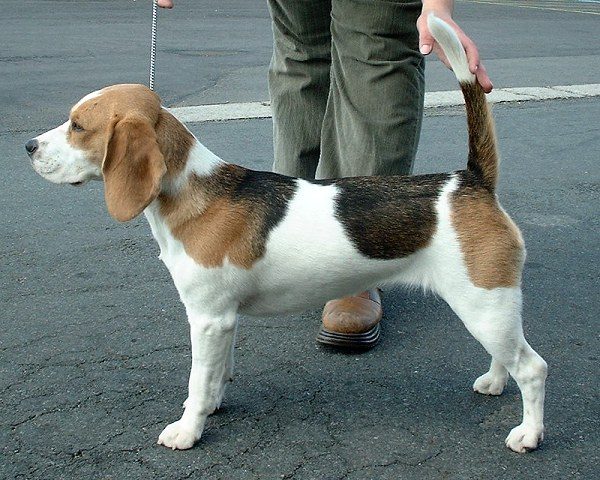
Photo: sannse, CC BY-SA 3.0, via Wikimedia Commons

- Size
- Small
- Height
- 33–40 cm
- Weight
- 9–11 kg
- Energy
- High
- Intelligence
- Moderate
Overview
The Beagle is a compact scent hound developed to hunt hare in packs, with a voice that carries across fields and a nose that will not be argued with. Cheerful, sturdy, and famously food-driven, it is a family hound that still thinks like a hunter.
Origin
Small hounds called beagles existed in Britain by the later Middle Ages; Elizabeth I kept pocket-sized 'singing beagles.' The modern breed was standardized in the nineteenth century from several Southern English hound types. Beagles reached the United States in numbers after the Civil War and were AKC-recognized in 1885. Two height varieties are shown in America: not exceeding 13 inches, and over 13 but not exceeding 15 inches.
Size & weight
AKC: two varieties, 33 cm (13 in) and 38 cm (15 in) at the withers. Typical weight 9–11 kg, with some individuals heavier. The breed should be 'a miniature Foxhound, solid and big for his inches.'
Temperament
Amiable, gregarious, and stubborn in the nicest way. Bred to work in a pack, Beagles usually enjoy other dogs and people. They are not natural guardians. Once a scent is locked, recall can evaporate; this is breed function, not a training failure alone. The bay and howl are part of the package.
Energy
High and durable rather than explosive. Beagles were meant to trot for hours. Daily walks are a start; off-leash only in securely fenced ground because the nose leads. Scent work and tracking games tire them more honestly than jogging beside a bicycle.
Intelligence
Scent hounds are bred to follow a trail independently; a Beagle will learn manners, but the nose often outranks the handler.
Intelligence here means typical trainability, not a ranking of the dog.
Coat & grooming
A dense, hard, medium-short hound jacket that stands weather. Any true hound color is acceptable; tricolor (black, tan, and white) and red-and-white are classic. The tail typically wears a white tip, a flag for hunters in cover.
Low: weekly brushing, baths when the hound smell accumulates. Ears need regular inspection and cleaning. Nails grow quickly on dogs that do more sniffing than road-work.
Health notes
Obesity is the great Beagle vice and drives orthopedic and metabolic disease. Cherry eye, glaucoma, epilepsy, hypothyroidism, and intervertebral disc disease appear. Beagle pain syndrome (steroid-responsive meningitis-arteritis) is uncommon but documented. Floppy ears plus field work equal otitis if neglected.
Care
Feed by measure, not free-choice; they will empty a bin. A six-foot fence is not always enough—Beagles climb and tunnel. Teach a solid wait at doors. They often do well with another dog for company. Never count on off-leash reliability in unfenced open country.
Fun facts
- Snoopy of Peanuts is a Beagle, drawn as a much more athletic cartoon than most kitchen Beagles.
- The breed is widely used in detection work because of its nose and portable size.
- The white-tipped stern (tail) was selected so hunters could see the dog in tall grass.
The Dog Codex is an editorial reference, not veterinary advice. Health notes summarize conditions that appear in breed literature; they do not diagnose an individual dog and do not replace examination by a licensed veterinarian.