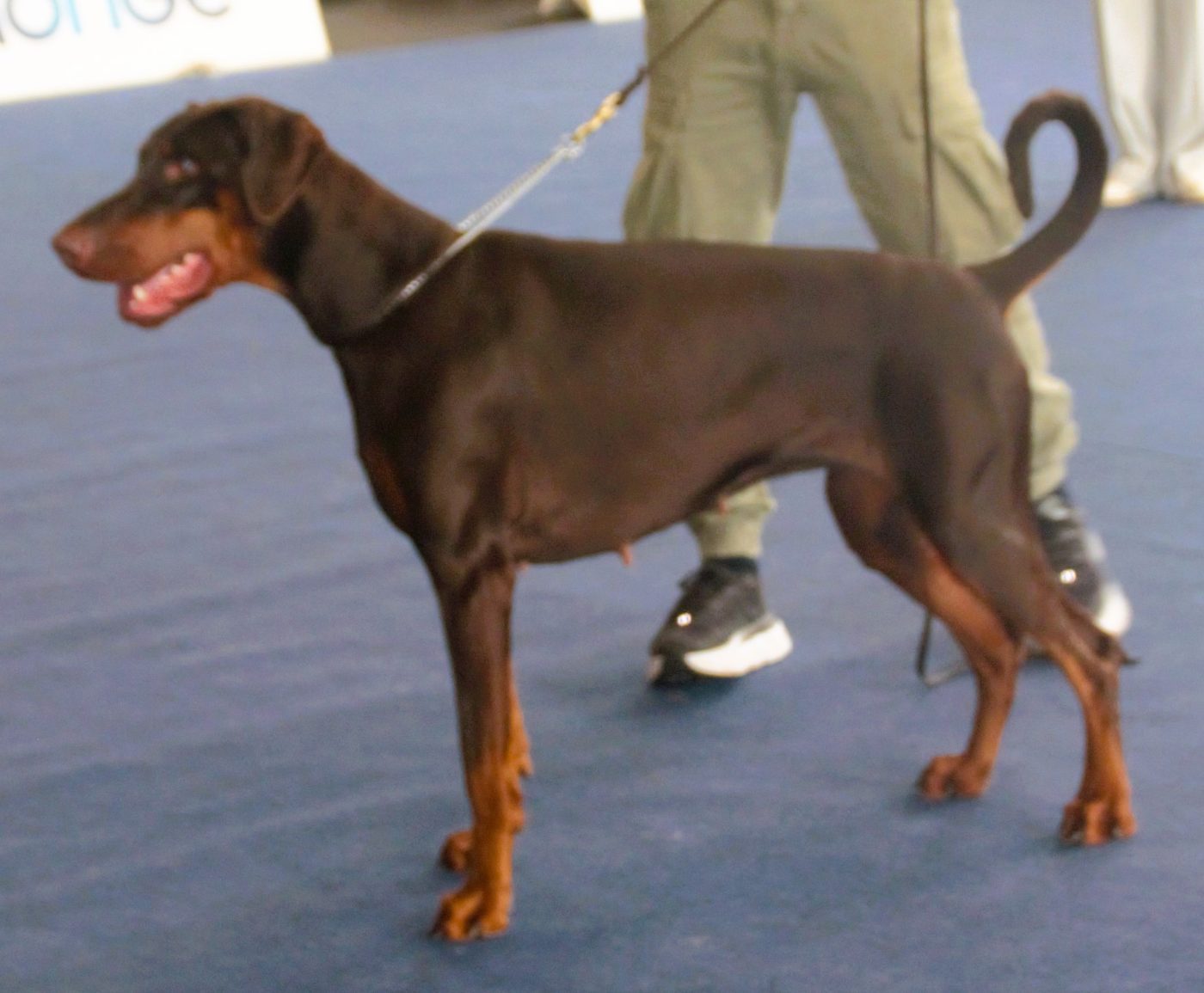
Photo: Canarian, CC BY 4.0, via Wikimedia Commons

- Size
- Large
- Height
- 61–72 cm
- Weight
- 27–45 kg
- Energy
- High
- Intelligence
- High
Overview
The Doberman Pinscher is a sleek, square-built working dog created as a personal guardian: loyal, athletic, and intensely tuned to its handler. In the right home it is an elegant companion and protection prospect; without training and social life it is too much dog.
Origin
Louis Dobermann, a tax collector and dog catcher in Apolda, Germany, sought a medium-large protector in the late nineteenth century. The mix is not fully documented but likely included Rottweiler, German Pinscher, Manchester Terrier, and coursing blood. Otto Goeller and others stabilized the type. The AKC registered the breed in 1908. Cropped ears and docked tails remain common in some countries and banned in others.
Size & weight
Males 66–72 cm; females 61–68 cm. Compact and muscular, more square than rectangular. American show dogs often appear more refined than some European working lines.
Temperament
Loyal, alert, and typically reserved with strangers rather than indiscriminately friendly. A well-bred Doberman is stable and trainable to a high level; poor breeding or isolation can produce fear or sharpness. They want to be with their people. Early, broad socialization is not optional.
Energy
High. They need daily vigorous exercise and work—obedience, tracking, protection sport, running. A short walk leaves a young Doberman pent-up. Mental tasks are as important as physical ones.
Intelligence
Dobermans are working dogs with a strong capacity for formal obedience, protection sport, and close partnership when trained fairly.
Intelligence here means typical trainability, not a ranking of the dog.
Coat & grooming
Short, smooth, and close-lying. Colors: black, red, blue, and fawn (Isabella), each with rust markings in a prescribed pattern. White Dobermans exist but are disqualified in AKC conformation.
A weekly rubdown and attention to nails and teeth. Thin coat means they feel cold and sunburn. Some blues and fawns show color dilution alopecia.
Health notes
Dilated cardiomyopathy is a major breed concern. von Willebrand disease, hypothyroidism, hip dysplasia, and cervical vertebral instability occur. The cancer rate, including osteosarcoma, is significant. Median lifespan is often around 10–12 years, shorter when heart disease is present.
Care
This is a house dog that wants a job. Formal training from puppyhood is essential. They generally do poorly relegated to a kennel. Heat and ice are hard on the short coat.
Fun facts
- Dobermans served as messenger and sentry dogs for the United States Marine Corps in the Pacific in World War II.
- Rust markings have a specified map: muzzle, cheeks, spots above the eyes, throat, legs, and below the tail.
- In Germany the breed is registered as the Dobermann.
The Dog Codex is an editorial reference, not veterinary advice. Health notes summarize conditions that appear in breed literature; they do not diagnose an individual dog and do not replace examination by a licensed veterinarian.