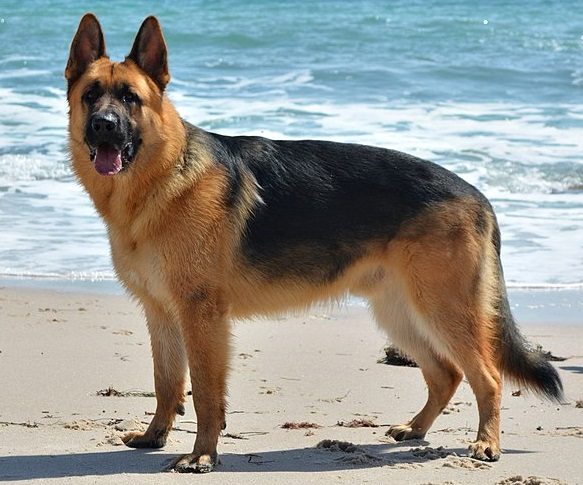
Photo: gomagoti, CC BY-SA 2.5, via Wikimedia Commons
.jpg)
- Size
- Large
- Height
- 55–65 cm
- Weight
- 22–40 kg
- Energy
- High
- Intelligence
- Very high
Overview
The German Shepherd Dog is a versatile herding and service breed created to be a single type of German farm dog: intelligent, trainable, and courageous. It has become a police, military, guide, and sport dog worldwide—and a cautionary tale about structure when show fads outrun function.
Origin
Max von Stephanitz and the Verein fur Deutsche Schaferhunde, founded in 1899, standardized herding dogs of Germany around a foundation dog, Horand von Grafrath. The goal was utility. Two world wars spread and then renamed the breed (Alsatian in Britain). The AKC recognized it in 1908. Working lines and show lines now sometimes look like different breeds.
Size & weight
Males 60–65 cm, females 55–60 cm. Strong, slightly longer than tall. Extreme hindquarter angulation in some show lines is a modern departure from the early, more moderate dogs.
Temperament
Loyal, serious, and typically aloof with strangers. A good GSD is confident and biddable; a poorly bred or isolated one may be fearful or sharp. They need a handler. They often bond tightly to a household and can be protective. Early social life and training are mandatory.
Energy
High. Work—herding, tracking, obedience, protection sport, hiking—is the point. A backyard does not employ a GSD. Mental work prevents neurotic habits (shadow chasing, tail chewing) seen in under-occupied dogs.
Intelligence
A premier working breed: GSDs were developed for trainability in herding, police, and service work, with a strong desire to partner.
Intelligence here means typical trainability, not a ranking of the dog.
Coat & grooming
A dense double coat, medium length, with a harsh outer jacket. Long-coated German Shepherds occur and are recognized in some registries as a variety. Colors: most often black and tan, sable, or solid black. White is a disqualification in AKC conformation (the White Swiss Shepherd is a separate breed).
Heavy seasonal shed—'German shedder' is a nickname. Brush often. The coat is weatherproof; shaving is unnecessary and unwise.
Health notes
Hip and elbow dysplasia are historic issues; OFA/SV screening is expected. Degenerative myelopathy (SOD1) is common; DNA tests exist. Gastric dilatation-volvulus, exocrine pancreatic insufficiency, and various cancers occur. The breed's back and hindlimb structure in extreme show types is widely criticized by veterinarians.
Care
Train from day one. Provide a job. Keep them as house dogs with work, not isolated guardians. Buy from people who health-test and can show working character, not merely a stacked photograph. Watch weight; a long back does not need extra kilos.
Fun facts
- Rin Tin Tin, a GSD rescued in World War I, helped popularize the breed in America.
- Von Stephanitz's motto was that the breed's utility was the true standard of beauty.
- In Britain the breed was long called Alsatian, a wartime renaming.
The Dog Codex is an editorial reference, not veterinary advice. Health notes summarize conditions that appear in breed literature; they do not diagnose an individual dog and do not replace examination by a licensed veterinarian.