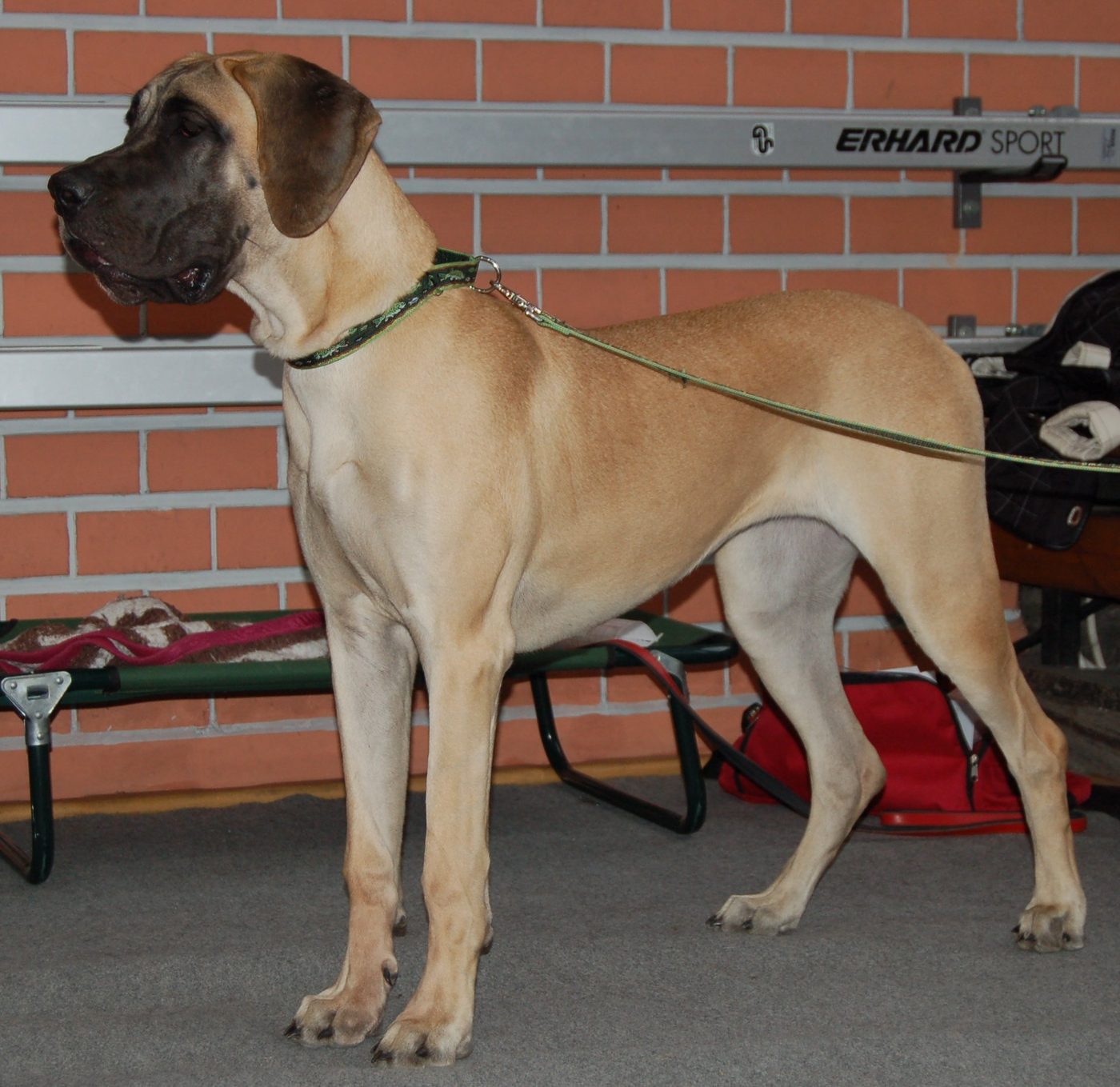
Photo: Lilly M, CC BY-SA 2.5, via Wikimedia Commons

- Size
- Giant
- Height
- 71–86 cm
- Weight
- 45–90 kg
- Energy
- Moderate
- Intelligence
- High
Overview
The Great Dane is a giant, elegant mastiff-sighthound blend once used to hunt wild boar. Despite its size it is often a soft-mannered house companion—one that still knocks over coffee tables with its tail and lives a shorter life than smaller dogs.
Origin
Large boar hounds were kept by German nobility for centuries. Crossing of mastiff-type dogs with faster hounds produced the Deutsche Dogge, standardized in the nineteenth century. The English name Great Dane is a historical accident; the breed is German, not Danish. The AKC recognized it in 1887.
Size & weight
Males at least 76 cm, preferably 81 cm or more; females at least 71 cm, preferably 76 cm or more. The outline should be square, noble, and never coarse.
Temperament
Typically friendly, patient, and people-focused. A well-socialized Dane is gentle with supervised children. Poorly socialized giants may be fearful—dangerous at this mass. They often think they are lap dogs.
Energy
Moderate. Puppies should not be road-worked like adult sporting dogs; growth plates are vulnerable. Adults enjoy walks and short play sessions more than long runs.
Intelligence
Danes are generally biddable giants; they learn household manners readily, though their size makes early training essential rather than optional.
Intelligence here means typical trainability, not a ranking of the dog.
Coat & grooming
Short and thick, glossy. Colors include fawn, brindle, blue, black, harlequin, and mantle. Unethical merle-related breeding can produce deaf and blind white dogs.
Minimal coat care; drool care is the real work. Provide a giant bed. Nails and lip folds need routine attention.
Health notes
Gastric dilatation-volvulus is extremely common; prophylactic gastropexy is often recommended. Dilated cardiomyopathy, hip dysplasia, osteosarcoma, and wobbler syndrome are significant. Lifespan commonly 7–10 years.
Care
Raise the puppy on non-slip floors, control jumping, and use a giant-breed diet. Budget for food and veterinary care at scale. Teach polite leash manners before the dog weighs 70 kg.
Fun facts
- The breed is German; Dane stuck from French and English naming in the eighteenth century.
- Scooby-Doo is drawn as a Great Dane.
- Several Great Danes have held the record for world's tallest dog, standing over a meter at the shoulder.
The Dog Codex is an editorial reference, not veterinary advice. Health notes summarize conditions that appear in breed literature; they do not diagnose an individual dog and do not replace examination by a licensed veterinarian.