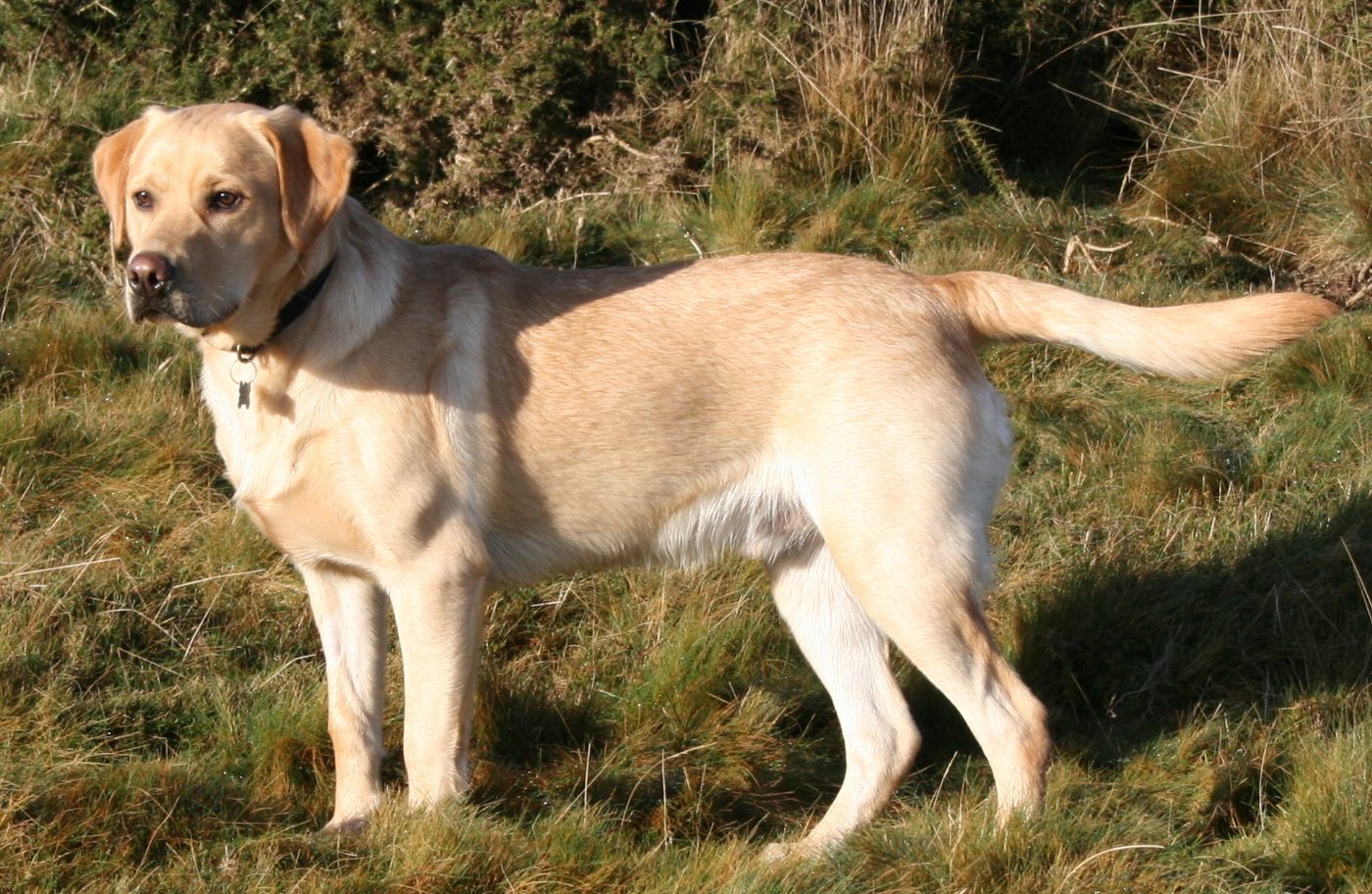
Photo: IDS.photos from Tiverton, UK, CC BY-SA 2.0, via Wikimedia Commons
.jpg)
- Size
- Large
- Height
- 54–61 cm
- Weight
- 25–36 kg
- Energy
- High
- Intelligence
- Very high
Overview
The Labrador Retriever is a sturdy, otter-tailed water dog bred to haul nets and fetch game from the North Atlantic, then refined in Britain as a gundog. It is among the world's most popular companion and working breeds: even-tempered, food-motivated, and eager to work with people.
Origin
Fishermen in Newfoundland kept a short-coated water dog, the St. John's water dog, that retrieved lines and fish in icy harbors. In the nineteenth century these dogs were exported to Britain, where sporting estates and the Earl of Malmesbury's kennels shaped the modern Labrador. The Kennel Club recognized the breed in 1903; the American Kennel Club followed in 1917. Yellow and chocolate coats appeared alongside the original black.
Size & weight
Males typically 57–62 cm and 29–36 kg; females 54–60 cm and 25–32 kg. The breed should be strongly built without bulk that would hinder swimming.
Temperament
Outgoing, steady, and famously people-oriented. Labs are typically patient with children and other dogs when well socialized, but they are not a low-drive lap dog: they mouth, retrieve, and seek occupation. Soft-mouthed by design, they may still chew when under-exercised. Guard instinct is modest; they are more likely to greet a stranger than to challenge one.
Energy
High. Bred for a full day in the field or boat, a young adult Lab usually needs vigorous daily exercise—swimming, retrieving, hiking—not a brief yard outing. Mental work (scent games, training) prevents the restless chewing and counter-surfing the breed is known for.
Intelligence
Labs are among the most biddable working gundogs: food-motivated, eager to work with people, and a mainstay of guide and detection programs.
Intelligence here means typical trainability, not a ranking of the dog.
Coat & grooming
A dense, weather-resistant double coat: a short, straight outer jacket and a soft undercoat that sheds seasonally in quantity. Colors are black, yellow (cream to fox-red), and chocolate. The hallmark 'otter tail' is thick and round, used as a rudder in water.
Weekly brushing most of the year; daily during heavy shed. Baths as needed—the coat's oils are part of its water resistance, so over-bathing is unwise. Trim nails, check ears after swimming, and keep the thick tail clean.
Health notes
Hip and elbow dysplasia are well documented; reputable breeders screen. Exercise-induced collapse (EIC) and centronuclear myopathy occur in some lines. Obesity is the breed's most common management problem and worsens joints. Progressive retinal atrophy and a higher-than-average risk of lymphoma and mast-cell tumors warrant regular veterinary exams. Ear infections follow swimming if ears stay damp.
Care
Feed a measured adult ration; Labs will overeat. Provide structured retrieves or swimming several times a week. Early training channels the mouthing instinct into a retrieve. They fare poorly left alone all day without a job. Water access is a gift, not a requirement, but a bored Lab will invent its own work.
Fun facts
- The breed's official name honors Labrador, though the founding stock came from Newfoundland.
- Labs have been used as guide dogs, detection dogs, and search-and-rescue workers worldwide.
- The otter tail is a breed hallmark: thick at the base, tapering, and covered in short dense coat.
The Dog Codex is an editorial reference, not veterinary advice. Health notes summarize conditions that appear in breed literature; they do not diagnose an individual dog and do not replace examination by a licensed veterinarian.