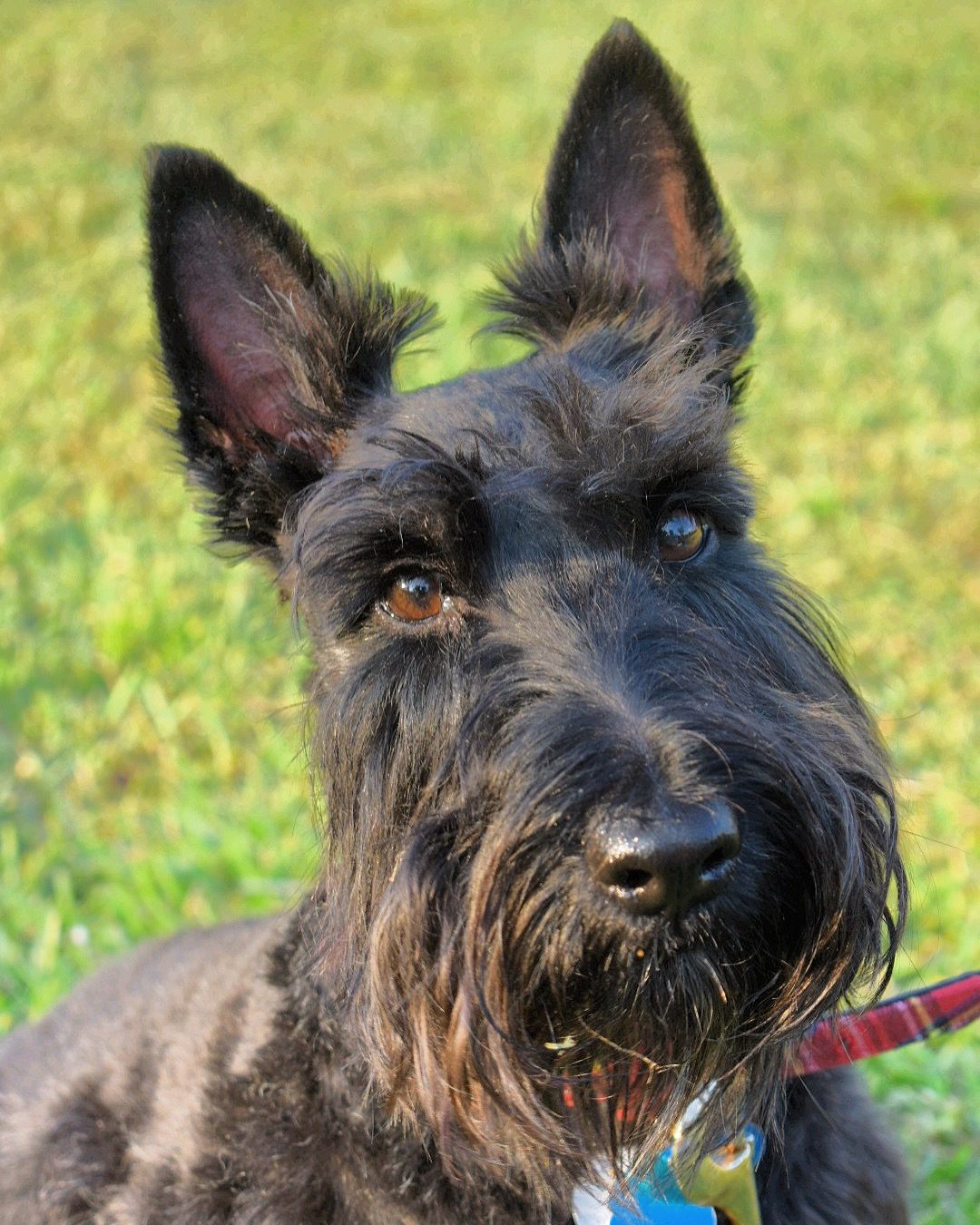
Photo: Elise Carroll, CC BY-SA 4.0, via Wikimedia Commons

- Size
- Small
- Height
- 25 cm
- Weight
- 8–10 kg
- Energy
- Moderate
- Intelligence
- High
Overview
The Scottish Terrier is a short-legged, bearded earth dog bred to bolt otter and fox from rocky dens. Dignified, stubborn, and often a one-family dog, it carries more gravitas per kilogram than most toys—and a legendary independent mind.
Origin
Highland farmers kept several short-legged terriers. The Scottie, sometimes called the Aberdeen Terrier, was separated from the Skye, Cairn, and West Highland types in the nineteenth century. The breed was AKC-recognized in 1885 and became an American political emblem via President Franklin D. Roosevelt's Fala.
Size & weight
About 25 cm at the shoulder; males around 8.5–10 kg, females 8–9.5 kg. Compact, substantial, and longer than tall, with a distinctive profile: long head, short back, and a tail carried gaily.
Temperament
Aloof with strangers, devoted at home, and not a natural mixer at the dog park. Scotties have a dry humor and a low tolerance for being treated as toys. They can be scrappy with other animals. Training works when it respects the terrier bargain: cooperation, not servility.
Energy
Moderate. Daily walks and a chance to investigate bushes satisfy many adults. They will sprint in the yard and then nap. Mental stubbornness burns more owner energy than the dog's legs do.
Intelligence
Scotties are confident earth-dogs: they learn household rules, with the usual terrier habit of asking why the rule exists.
Intelligence here means typical trainability, not a ranking of the dog.
Coat & grooming
A hard, wiry outer jacket and a dense undercoat, typically in black, brindle, or wheaten. The characteristic beard, eyebrows, and furnishings are hand-stripped for the ring.
Hand-stripping several times a year keeps the correct harsh texture; clipping is easier for pets but softens and fades the coat. Daily attention to the beard after meals. Nails and the compact feet need regular care.
Health notes
Scottie cramp (a neurological movement disorder), von Willebrand disease, craniomandibular osteopathy, and a higher-than-average rate of transitional cell carcinoma of the bladder are documented. Patellar luxation and skin allergies occur. Keep them lean.
Care
They are house dogs with a terrier's prey drive—secure the yard. Do not expect off-leash reliability near squirrels. They often prefer one or two people. Grooming is part of ownership, not an optional spa day.
Fun facts
- Fala, FDR's Scottie, is sculpted beside the president at the Franklin Delano Roosevelt Memorial in Washington.
- The Monopoly mascot dog is a Scottish Terrier.
- Scottie cramp, despite the name, is not a muscle cramp but a heritable neurological episode often triggered by excitement.
The Dog Codex is an editorial reference, not veterinary advice. Health notes summarize conditions that appear in breed literature; they do not diagnose an individual dog and do not replace examination by a licensed veterinarian.