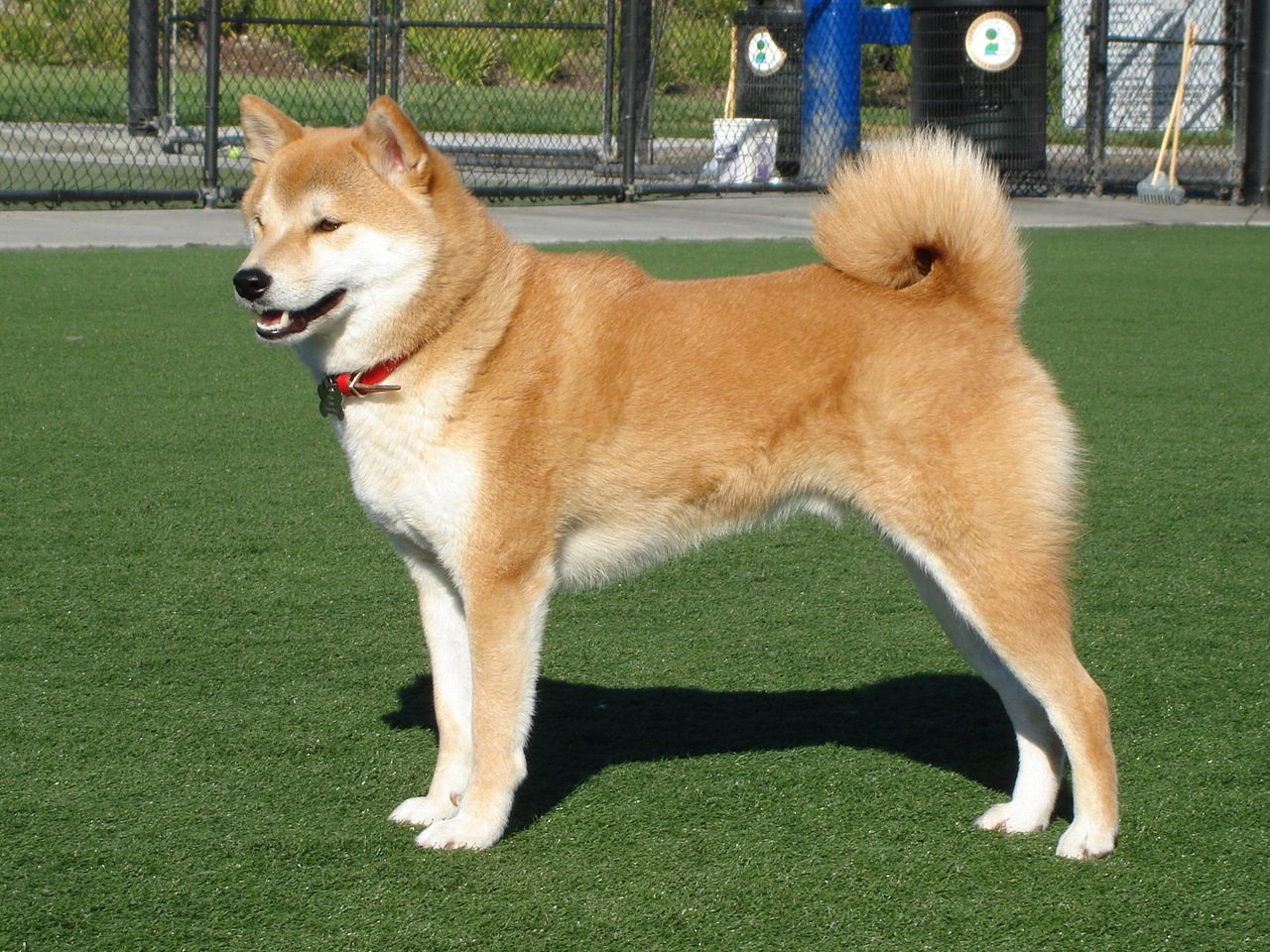
Photo: Takashiba, Public domain, via Wikimedia Commons

- Size
- Small
- Height
- 33–43 cm
- Weight
- 8–11 kg
- Energy
- Moderate
- Intelligence
- Moderate
Overview
The Shiba Inu is Japan's smallest native hunting spitz, a bold, fox-like dog used on birds and small game in brushy hill country. Clean, catlike, and famously self-willed, it is not a retriever in a spitz coat—owners who wanted an easy pleaser are often surprised.
Origin
Shiba-type dogs lived in the Japanese mountains for centuries. After World War II, distemper and crossing nearly erased them; fanciers reconstructed the breed from remaining regional strains (Shinshu, Mino, San'in). Declared a living natural monument in Japan in 1936. The AKC placed the Shiba in the Non-Sporting Group in 1992.
Size & weight
Males about 40 cm, females 37 cm, with a small window. Typical weight 8–11 kg. A small, well-balanced spitz, never weedy or coarse.
Temperament
Alert, independent, and often reserved with strangers. Shibas can be intensely clean and dislike handling of feet or mouth. Same-sex aggression is not rare. The 'Shiba scream' is real. Recall is a lifelong project. They bond, but on terms that feel more feline than canine to some families.
Energy
Moderate to moderately high. Daily walks, off-leash only in secure areas, and games. They are athletic jumpers and climbers. Mental enrichment matters; they bore of repetition.
Intelligence
A primitive hunting spitz, the Shiba is famously independent and catlike; training is possible, partnership is negotiated.
Intelligence here means typical trainability, not a ranking of the dog.
Coat & grooming
A stiff, straight outer coat and a soft dense undercoat. Urajiro (pale markings) on the sides of the muzzle, cheeks, chest, and legs is required in red and sesame. Colors: red, sesame, black-and-tan. Cream is a disqualification in AKC conformation.
Blow coats twice a year in dramatic fashion. Weekly brushing otherwise. They often self-groom. Baths are occasional; they usually stay relatively clean.
Health notes
Allergies, hip dysplasia, luxating patellas, and glaucoma occur. A hereditary GM1 gangliosidosis is tested in some breeding programs. Eye exams and hip screening are wise. They can be sensitive to vaccines or anesthesia in individual cases—not a breed-wide rule, but worth discussing.
Care
A six-foot fence is a starting point; they climb. Leash manners and a harness help. Socialize without flooding. They are not a first dog for someone who wants off-leash parks and doggy daycare as a lifestyle. Provide puzzle feeders; they are food-interested but not Labrador-greedy.
Fun facts
- Shiba may mean 'brushwood,' for either the terrain they hunted or a reddish color like brushwood.
- Doge meme fame made the breed globally visible; the temperament did not become easier.
- Urajiro, the pale ventral markings, is a defining beauty point in Japan.
The Dog Codex is an editorial reference, not veterinary advice. Health notes summarize conditions that appear in breed literature; they do not diagnose an individual dog and do not replace examination by a licensed veterinarian.