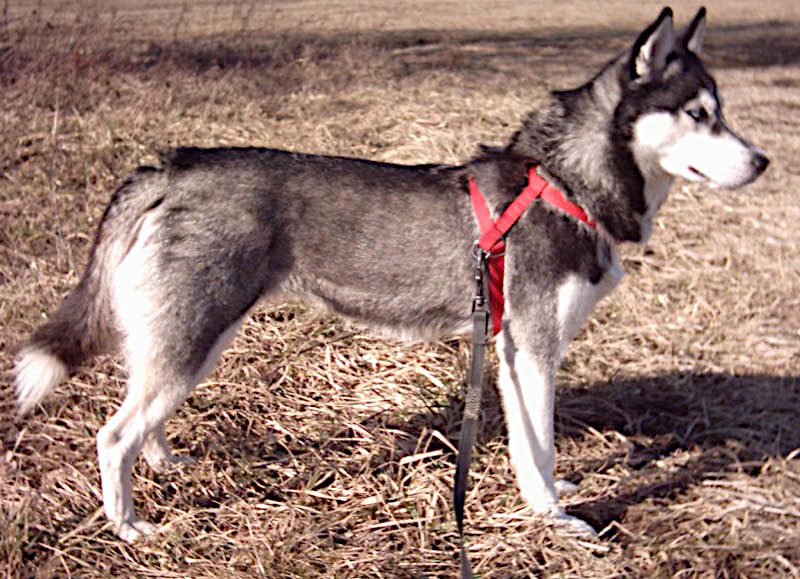
Photo: xJaM, CC BY-SA 3.0, via Wikimedia Commons

- Size
- Large
- Height
- 51–60 cm
- Weight
- 16–27 kg
- Energy
- High
- Intelligence
- Moderate
Overview
The Siberian Husky is a medium-large northern sled dog developed by the Chukchi people to travel long distances at a moderate speed on relatively little food. Striking, vocal, and pack-minded, it is an endurance athlete with a Houdini streak—not a livestock guardian and not a one-room apartment dog.
Origin
Chukchi families in northeastern Siberia kept these dogs as transportation and household companions. In the early twentieth century they were imported to Alaska for sled racing, notably by Leonhard Seppala, and proved themselves in the 1925 serum run to Nome. The AKC recognized the breed in 1930. They are distinct from the larger Alaskan Malamute and from mixed Alaskan huskies used in modern distance racing.
Size & weight
Males 53–60 cm and 20–27 kg; females 51–56 cm and 16–23 kg. They should be capable of a day's travel without bulk. A heavy, oversized pet is not the working ideal.
Temperament
Friendly, mischievous, and typically not territorial. Huskies often greet strangers, howl rather than bark, and may be unreliable off-leash because of prey drive. They are pack animals: isolation produces noise and demolition. Independent compared with retrievers, they still want companionship—often of other dogs.
Energy
High endurance. They were bred to lope for hours. Daily running, skijoring, canicross, or long hikes in cool weather are appropriate. A hot climate plus a backyard is a recipe for holes, escapes, and frustration.
Intelligence
Huskies are working athletes with a reputation for independence: they learn, then decide whether the cue is worth following.
Intelligence here means typical trainability, not a ranking of the dog.
Coat & grooming
A medium-length double coat with a soft dense undercoat and a straight guard coat. All colors from black to white are allowed, with varied markings, and eyes may be blue, brown, amber, or one of each. The tail is a fox brush.
Seasonal blowouts require daily brushing; weekly otherwise. Do not shave the coat except for medical need. Baths are occasional. Check paws for ice balls after snow work.
Health notes
Generally hardy. Eye issues include cataracts, corneal dystrophy, and progressive retinal atrophy. Hip dysplasia is less common than in many working breeds but still screened. Zinc-responsive dermatosis and epilepsy appear in some lines. Heatstroke is a real risk.
Care
Secure fencing is mandatory; they dig and climb. They rarely make reliable off-leash companions. Provide chew-safe occupation and, ideally, a canine housemate. In warm regions, exercise at dawn and dusk. Training should be consistent; they bore easily.
Fun facts
- Seppala's lead dog Togo covered the longest stretch of the 1925 Nome serum run; Balto received more popular fame.
- Huskies often talk in howls and yodels rather than a sharp watchdog bark.
- The breed standard allows any coat color and both blue and brown eyes, including one of each.
The Dog Codex is an editorial reference, not veterinary advice. Health notes summarize conditions that appear in breed literature; they do not diagnose an individual dog and do not replace examination by a licensed veterinarian.